Gastric Sleeve in Istanbul
A Comprehensive Guide to Weight-Loss Surgery
What Is Gastric Sleeve Surgery?
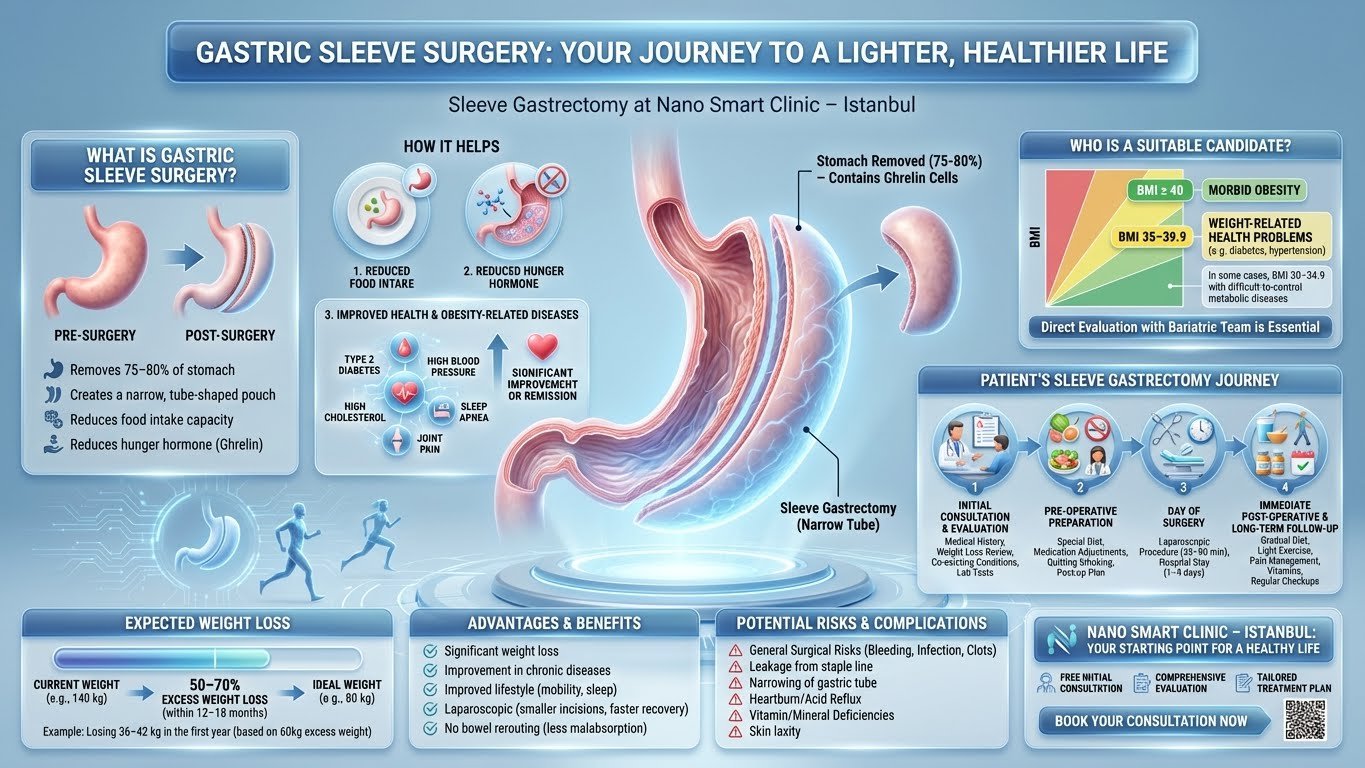
Gastric sleeve surgery (also called sleeve gastrectomy) is a type of bariatric surgery in which about 75–80% of the stomach is removed, leaving a narrow, tube-shaped stomach that looks like a banana. This smaller stomach cannot hold large amounts of food, and the part that produces most of the “hunger hormone” ghrelin is removed, which helps reduce appetite significantly.
In most modern centers in Istanbul and across Turkey, gastric sleeve surgery is performed laparoscopically through small incisions in the abdomen. This usually means:
-
Less pain after surgery
-
A shorter hospital stay
-
Faster return to normal daily activities compared with open surgery
Who Is a Good Candidate for Gastric Sleeve Surgery?
According to international bariatric surgery societies such as ASMBS and IFSO, metabolic and bariatric surgery – including gastric sleeve – is considered when:
-
Body Mass Index (BMI) ≥ 40 kg/m² (severe obesity), or
-
BMI 35–39.9 kg/m² with weight-related health problems such as:
-
Type 2 diabetes
-
High blood pressure
-
High cholesterol
-
Obstructive sleep apnea
-
In selected cases, surgery can also be considered for patients with BMI 30–34.9 kg/m² who have metabolic diseases (such as difficult-to-control type 2 diabetes) despite optimal medical treatment.
Important note: Candidacy for surgery is never decided online. It must be confirmed after an in-person assessment with a bariatric surgeon and a multidisciplinary team (cardiology, anesthesia, nutrition, etc.).
How Does Gastric Sleeve Help With Weight Loss and Better Health?
1. Smaller Stomach, Smaller Portions
After gastric sleeve surgery, the stomach volume becomes much smaller (around 100 ml on average). You feel full with less food, so your daily calorie intake naturally decreases, which leads to weight loss.
2. Reduced Hunger Hormone
The removed part of the stomach contains most of the cells that produce ghrelin, the hormone that stimulates hunger. Lower ghrelin levels help reduce appetite and cravings for large meals.
3. Improvement in Obesity-Related Conditions
Many studies have shown that bariatric surgery, including gastric sleeve, can lead to:
-
Improvement or even remission of type 2 diabetes in many patients
-
Reduction in blood pressure
-
Better cholesterol and triglyceride levels
-
Improvement in sleep apnea and joint pain
-
Lower long-term risk of cardiovascular disease
4. More Effective Than Medication Alone Over the Long Term
Recent real-world data presented at major bariatric meetings found that bariatric surgery (including sleeve gastrectomy) can lead to about five times more weight loss over 2–3 years compared with GLP-1 weight-loss injections such as semaglutide or tirzepatide, with more durable results for many patients.
This doesn’t mean medications are not useful—but it highlights that surgery remains the most powerful tool for substantial, long-term weight loss when used in the right patients as part of a comprehensive treatment plan.
The Patient Journey: Steps of Gastric Sleeve Surgery
1. Initial Consultation and Assessment
During your first evaluation for gastric sleeve in Istanbul, the medical team will:
-
Take a complete medical history
-
Review your previous weight-loss attempts
-
Evaluate obesity-related conditions (diabetes, hypertension, heart disease, etc.)
-
Request necessary blood tests and imaging
The goal is to ensure the surgery is safe and appropriate for you, not just a quick cosmetic decision.
2. Pre-Operative Preparation
Your bariatric team may recommend:
-
A special pre-op diet to shrink the liver
-
Stopping certain medications (such as blood thinners) before surgery
-
Stopping smoking
-
A session with a dietitian to explain the post-surgery diet phases
3. The Day of Surgery
-
Gastric sleeve surgery is usually performed under general anesthesia using laparoscopy.
-
The operation typically takes 45–90 minutes, depending on the case.
-
Most patients stay in the hospital from one night up to 2–3 days, depending on the center’s protocol and your general condition.
4. Early Post-Operative Period
After surgery, the diet progresses step by step:
-
Clear liquids in the first days
-
Then full liquids
-
Then pureed foods
-
Then soft foods
-
Finally gradual return to solid foods as advised by your doctor and dietitian
You’ll also be encouraged to:
-
Walk and move early to reduce the risk of blood clots
-
Take prescribed medications for pain control and acid reduction
-
Use vitamin and mineral supplements if recommended
5. Long-Term Follow-Up
Long-term follow-up is essential for success and safety:
-
Regular visits with your bariatric surgeon
-
Ongoing dietitian support
-
Regular monitoring of vitamin levels, iron, calcium, vitamin B12 and vitamin D
How Much Weight Can I Lose After Gastric Sleeve?
Results vary between individuals, but studies show that patients generally lose:
-
Around 50–70% of their excess body weight within 12–18 months after surgery (not 50–70% of total body weight).
Weight loss is usually faster in the first 6 months, then slows down but continues as long as you maintain a healthy lifestyle.
Example:
If your ideal weight is 80 kg and your current weight is 140 kg, your excess weight is 60 kg.
Losing 60–70% of this excess means losing about 36–42 kg in the first year, provided you follow medical and nutritional advice.
Advantages of Gastric Sleeve Surgery
Based on medical evidence from reputable bariatric societies, the main advantages include:
-
Significant weight loss within a reasonable time frame
-
Clear improvement in many obesity-related conditions
-
Better quality of life: easier movement, better sleep, higher ability to exercise
-
Laparoscopic technique: small incisions, less pain, faster recovery
-
No rerouting of the intestines, so less risk of malabsorption than with some other bariatric procedures
Risks and Possible Complications
Like any surgery, gastric sleeve carries risks that must be clearly understood:
General Surgical Risks
-
Bleeding
-
Infection
-
Blood clots in the legs or lungs
-
Anesthesia-related complications
Sleeve-Specific Risks
-
Leak from the staple line
-
Narrowing (stricture) of the gastric tube
-
New or worsened acid reflux in some patients
-
Deficiencies in certain vitamins and minerals if supplements are not taken
-
Loose or sagging skin after major weight loss, which may require body-contouring surgery for some patients
This is why it is crucial to choose:
-
An accredited hospital
-
A bariatric surgeon with substantial experience in obesity surgery
-
A dedicated follow-up team (nutrition, physical activity, psychological support when needed)
Life After Gastric Sleeve: Success Is in Your Hands
Surgery is a powerful tool—but not a magic wand. Long-term success depends heavily on your lifestyle:
-
Following a healthy meal plan (small portions, enough protein, avoiding sugary drinks and junk food)
-
Drinking water regularly throughout the day
-
Staying physically active (even daily walking makes a difference)
-
Taking prescribed supplements as directed
-
Attending follow-up appointments regularly
With this approach, gastric sleeve becomes the starting point for a healthier life, not just “a lower number on the scale.”
Frequently Asked Questions About Gastric Sleeve
1. What is the difference between gastric sleeve and gastric bypass?
-
Gastric sleeve: reduces the size of the stomach only; the intestines are not rerouted.
-
Gastric bypass: reduces stomach size and bypasses part of the small intestine, which also reduces calorie absorption.
Both have advantages and specific indications. The best option for you should be decided after a full evaluation with a bariatric surgeon.
2. Is gastric sleeve a safe procedure?
No operation is completely risk-free, but gastric sleeve is considered relatively safe when:
-
Performed in a specialized, accredited center
-
Done by an experienced bariatric team
-
Combined with proper pre-operative assessment and post-operative follow-up
Major complication rates are generally low in high-volume, experienced centers.
3. When can I return to work after gastric sleeve?
It depends on your general health and the type of work you do, but many patients can return to light, desk-based work in about 2–3 weeks, after medical clearance from their surgeon.
4. Can I regain weight after gastric sleeve?
Yes, some weight regain is possible if:
-
You frequently consume high-calorie foods and sugary drinks
-
You stop exercising
-
You skip follow-up visits
However, with a healthy lifestyle and regular follow-up, most patients can maintain a significant portion of their weight loss in the long term.
5. Does gastric sleeve affect pregnancy and fertility?
Many women see improved fertility after major weight loss. But most guidelines recommend waiting 12–18 months before getting pregnant after bariatric surgery, because this is the period of rapid weight loss and nutritional adjustment.
If you are planning pregnancy, you should discuss it with your bariatric surgeon and gynecologist, and ensure close monitoring of nutrition and vitamin levels during pregnancy.
Gastric Sleeve in Istanbul at Nano Smart Clinic
If you are struggling with obesity and your weight is affecting your health and emotional well-being, gastric sleeve surgery in Istanbul at Nano Smart Clinic could be the starting point for a lighter, healthier life.
At Nano Smart Clinic, we focus on every detail before deciding on surgery through:
-
A comprehensive medical assessment of your health and weight
-
Explaining all available options (surgical and non-surgical)
-
Transparent discussion of benefits, risks, and realistic expectations
Start Your Free Bariatric Consultation
Your first step is simple:
Fill out the consultation form on our website or contact your medical coordinator via WhatsApp to receive:
-
A free initial assessment
-
A preliminary evaluation of your case by a team specialized in bariatric surgery
-
A personalized treatment and follow-up plan tailored to your needs and lifestyle
Gastric sleeve surgery infographic
Book your free consultation now with Nano Smart Clinic in Istanbul and start a safe, well-planned journey toward a healthy weight and a new life.
Ready for Gastric sleeve surgery؟
Get your FREE online consultation today at Nano Smart Clinic – Istanbul!